
Shelby County Arrest Report Sources
The Sheriff's navigation lists no rolling 72-hour or weekly blotter naming arrestees. Instead, Shelby County publishes in layers. The Inmate Listing splits into Current Inmates, Recent Arrivals, and Release in the Last Thirty Days. The Sheriff Archive Center stores monthly Prisoner Intake and Release reports, and those PDFs serve as the county's formal multi-day and historical arrest record.
The monthly format shines when an entry has rolled off a current portal mode or when exact intake and release times matter. It is not instant. Reports come out after each reporting month ends, and the archive shows only what the Sheriff has posted. No booking photographs appear in the documents.
Read Shelby Arrest Reports
Start with the date. A fresh arrest may still sit on the roster, while an older one lives in a completed monthly report. The archive's search controls let you pick an archive, a time period, a keyword, or a date range. Once a PDF opens, scan its text for the person's name or Book ID.
- Search Current Inmates and Release in the Last Thirty Days for the most recent listed record.
- Open the Sheriff's Archive Center and select Prisoner Intake and Release Reports.
- Choose the month that contains the likely intake or release date.
- Search the PDF for the exact name, then compare Book ID, timestamps, descriptors, and charges.
- Request a missing record from the custodian when the needed month or entry is not public.
The official archive page shows the county's monthly organization.
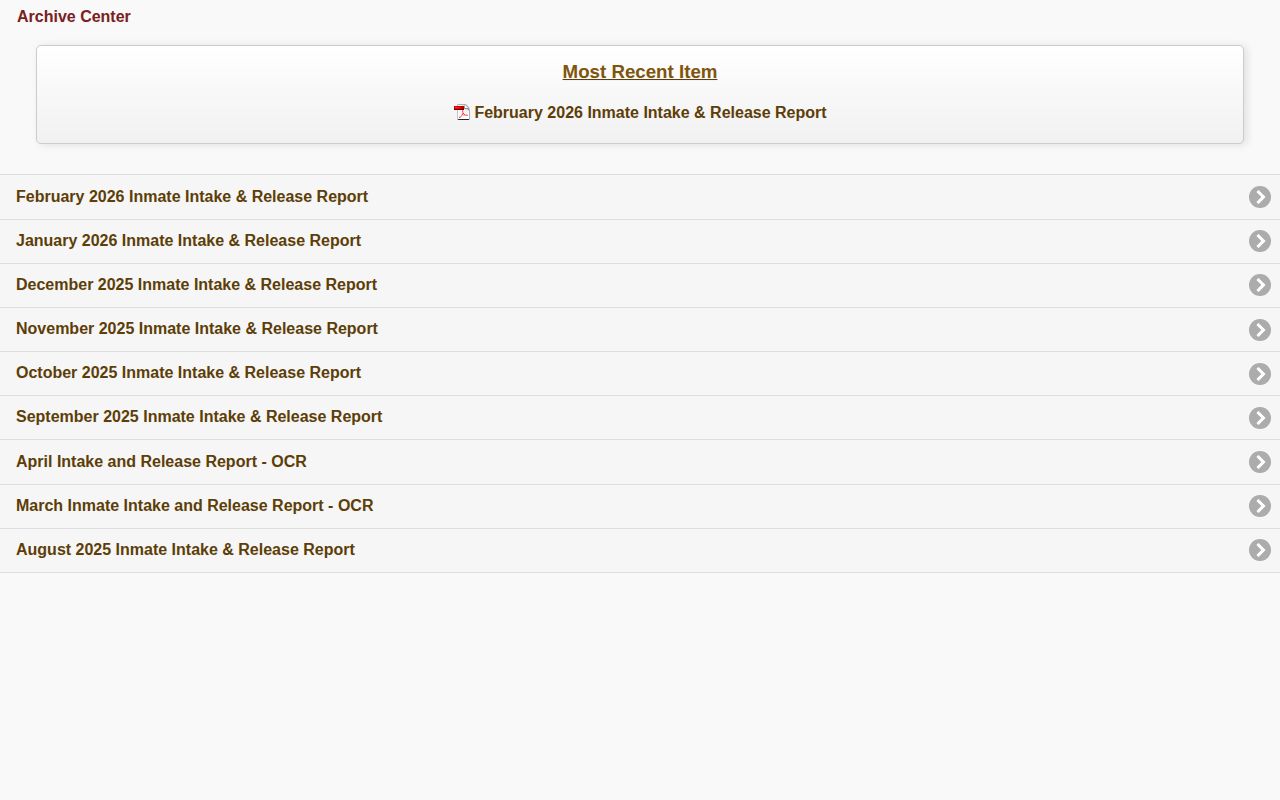
This archive is built for date-based research. It is not a live stream of new bookings.
Shelby Arrest Report Fields
Don't merge the archive and the current roster into one imagined record. Each one displays a different set of fields. Codes should stay exactly as printed unless the report itself defines them. Guessing at an abbreviation can twist a neutral arrest record into a claim it never made.
| Archive field | What the report provides |
|---|---|
| Book ID and inmate name | The record identifier and listed name. |
| Intake and release | Date-and-time lines for custody movement. |
| Release code | A short code or reason as recorded by the jail. |
| Sex, race, and age | Compact descriptors in the report. |
| Distinguishing marks | Scars or tattoos recorded during intake. |
| Charges | One or more charges associated with the booking. |
| Report generation time | The time the file was produced, not the arrest or booking time. |
The current roster adds bond fields and a clickable inmate picture. The monthly PDF has no photo. Neither source promises a court date, case outcome, attorney, full narrative, or arresting officer in its public table.
Weekend Shelby Arrest Reporting
Jail intake and release never stop. They run 24 hours a day, 365 days a year. Publication moves to its own rhythm. The roster carries no promised refresh time, and monthly reports appear only after the month closes. Weekends and holidays can stretch the gap between an arrest, a completed booking, a roster entry, a news story, and an archived report.
A larger batch appearing at once does not mean a surge in arrests. Posting or report timing often explains it. For current questions, the Arrested Today page separates the newest roster mode from the true 24-hour dispatch view.
Shelby Dispatch Is Not Arrests
The official Dispatch Log records enforcement context, not arrestees. Same-day entries might describe DUI traffic, a warrant check, or a vehicle stop, each with a time and location. Names, booking IDs, charge rows, bonds, and photographs are all omitted. That narrow design matters.
A dispatch event can explain why a news item beats a roster entry. It still cannot show who was arrested or whether booking happened. The reverse happens too: a jail record may exist with no clean public dispatch label. Use dispatch to place activity in time, then turn to a custody or court record for the person.
Note: Dispatch events and jail bookings are separate records kept for different operational purposes.
Shelby Arrest Reports in News
The Shelby County Reporter arrest-report format groups municipal arrests by city and date and lists charges. Publication is periodic or batched, never live. The WBRC Shelby County section runs event-driven stories built on official statements. Neither counts as a complete roster.
The local weekly example shows the city-grouped format in practice.
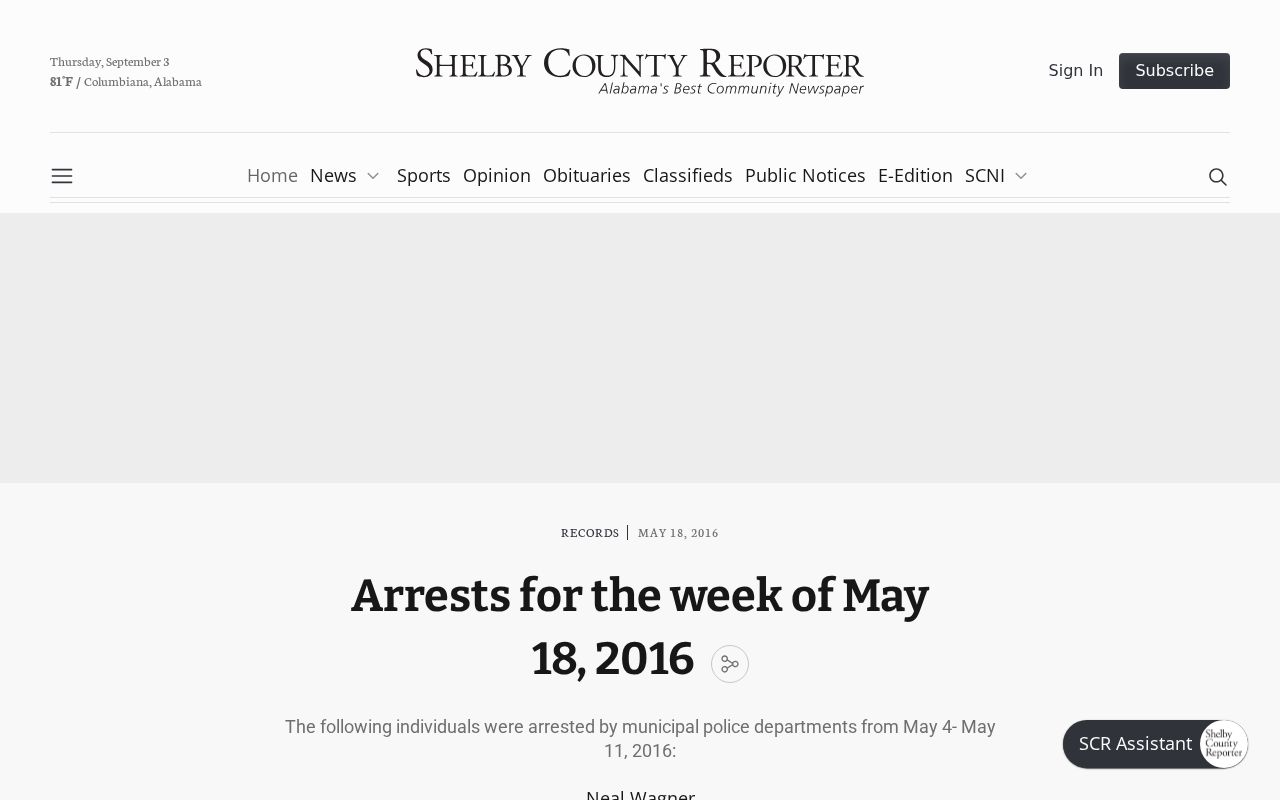
A published blotter like this one teaches format, but its age and selective scope call for a check against official records. The regional news section offers a second view of event-based coverage.
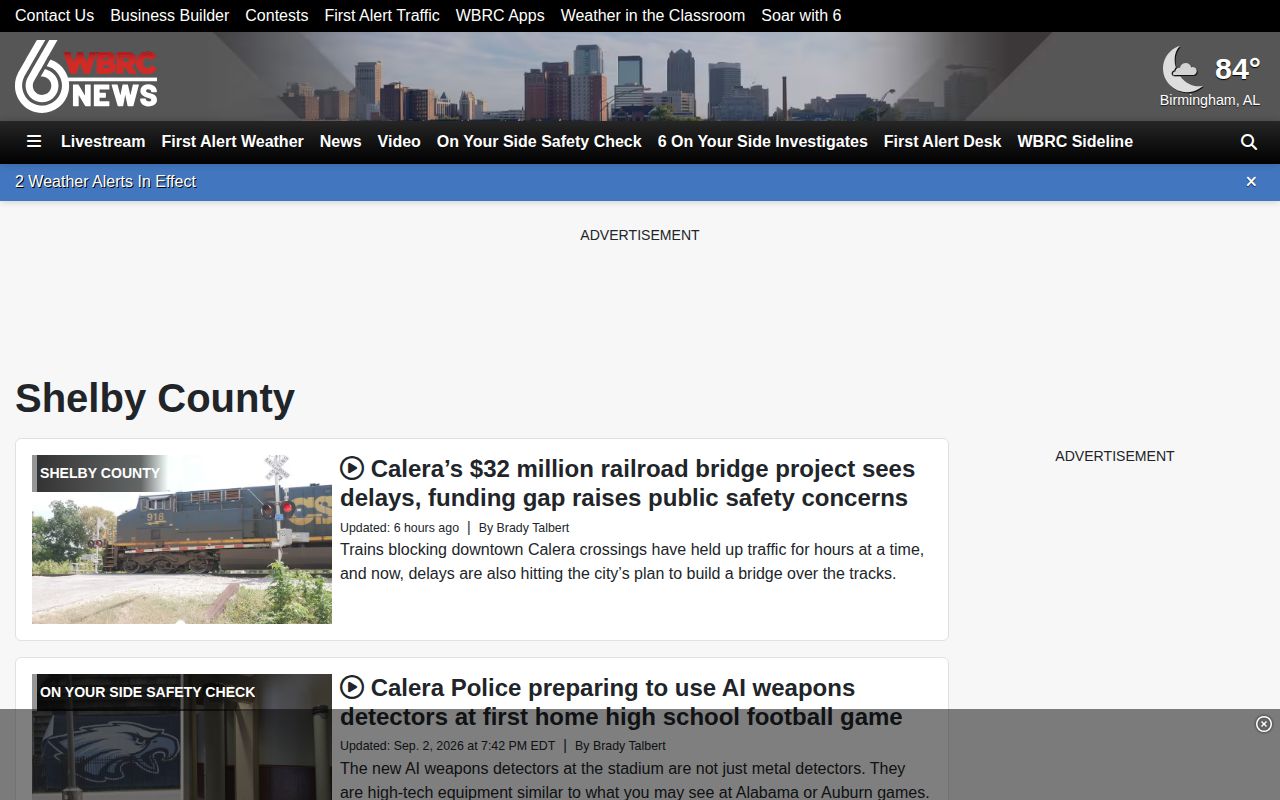
News fills in case narratives as events unfold. It is not a day-by-day inventory of every booking in Shelby County.
Older Shelby Arrest Records
The public archive is a preservation clue, not a full retention policy. Monthly reports from 2025 and 2026 appear online, yet the Sheriff publishes no fixed retention term for the current roster or booking photographs. A missing month or missing photo should trigger a targeted records request rather than an assumption that no record exists.
Make the request specific. Name the record series, the date range, the Book ID if you have it, and ask whether the item remains with the custodian. Alabama Department of Archives and History guidance places minimum retention and disposal rules with local Records Disposition Authorities. That guidance does not prove any modern Shelby County booking photo moved into the state incarceration collection.
The countywide public-record route expects precise requests and may return an estimate or a written reason for any redaction or withholding. Court records sit separately from all of this. Since a booking charge can end in dismissal, acquittal, plea, or sentence, use the right Circuit, District, or municipal court to finish the timeline.
Unofficial Shelby Arrest Archives
When Shelby County's official roster shifts or an archive page moves, commercial republishers often still hold older booking entries. Those copies can lag behind the county, miss entries, or lose track of what a court later decided. Treat them as a trail, not the destination. A daily or thirty-day arrest count shown on such a site reflects that publisher's own page tally. It is not a Shelby County statistic.
RecentlyBooked's Shelby section gives a rolling thirty-day view of arrests with names, dates, booking photos, charges, and filters. Arrests.org's Shelby section adds dated navigation and its own search tools. Three more republishers cover the county as well: Mugshots.zone Shelby, Busted Newspaper Shelby, and Arre.st Shelby. None of them can confirm who is in custody right now.
For that, go to the official roster. The Sheriff's archive handles intake and release questions, and the court of record settles the outcome of a charge. City labels on a copied booking entry deserve skepticism too. The arresting agency, the arrest location, the booking facility, and the current jail are four separate facts that a republisher may blur together. Its charge wording should never stand in for the source record.
Corrections start with the agency or court that created the record. A private copy does not control official data, and an entry vanishing from a live roster does not erase every lawful copy. If a republished entry is wrong or no longer matches a qualifying court result, use the publisher's own free correction process and send only the facts it needs. No paid service is needed to ask an official custodian to fix its own files. Anyone saving archive material should note the source date and exact document name, since monthly files get replaced and news stories get corrected after publication. Those details let you return to the same official report and tell its creation date apart from the arrest, release, or news dates inside it.